Meeting of Experts in Vascular Endothelium Medicine at the Medical University of Gdańsk
20.05.2026
The scientific seminar Vascular Endothelium Medicine, dedicated to contemporary research directions concerning endothelial function, mechanisms of endothelial injury, and the role of endothelial dysfunction in the development of cardiovascular diseases, was held on 15 May 2026 at the Medical University of Gdańsk. The event brought together researchers working on both basic and clinical aspects of vascular biology and microcirculation.
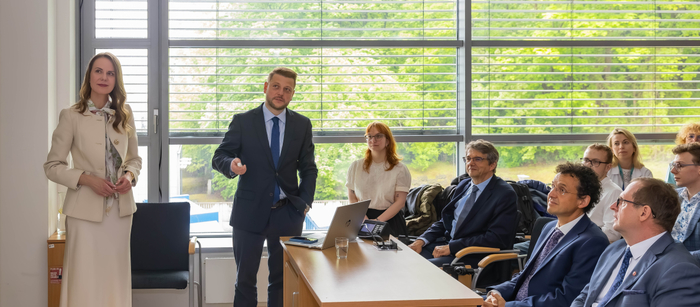
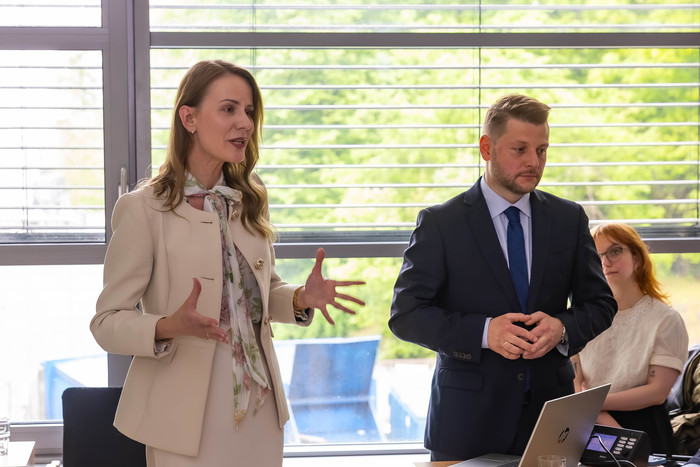
The seminar was opened by its organisers – Professor Marcin Hellmann, Head of the Department and Division of Cardiac Diagnostics at the MUG, and Associate Professor Barbara Kutryb-Zając, from the Department and Division of Biochemistry and Coordinator of the Experimental Cardio-Oncology Centre at the MUG. The event was also attended by Professor Michał Markuszewski, Rector of the MUG; Professor Michał Żmijewski, Vice-Rector for Science; and Professor Marta Baranowska-Kuczko, Chair of the Experimental Cardiology Section of the Polish Cardiac Society, which granted the event honorary patronage.
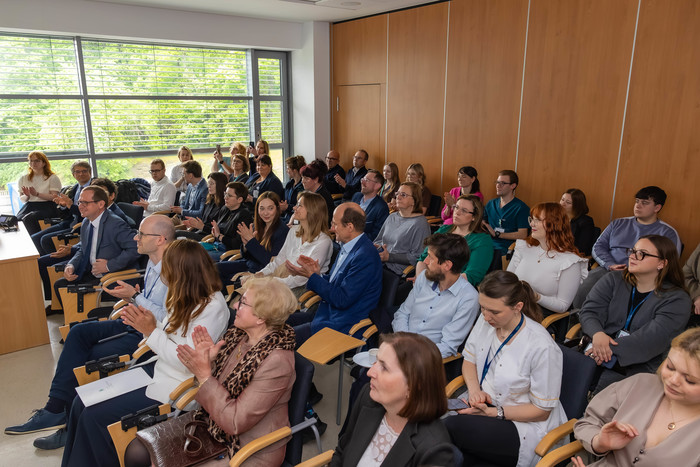
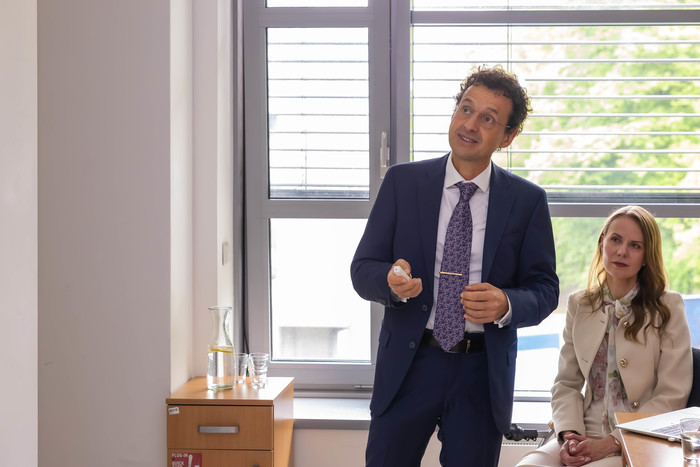
The seminar programme included lectures by recognised experts in endothelial biology and vascular pharmacology. Professor Jean-Luc Cracowski from Université Grenoble Alpes delivered a lecture on the physiology and pharmacology of the human vascular endothelium, as well as the role of microcirculation in cardiovascular diseases. Professor Stefan Chłopicki from Jagiellonian University discussed the complex and heterogeneous nature of endothelial dysfunction, extending beyond classical nitric oxide-dependent mechanisms. In turn, Professor Ryszard T. Smoleński from the Department and Division of Biochemistry at the MUG presented issues related to the role of nucleotides and purinergic signalling in mechanisms of vascular injury and potential endothelium-targeted therapies.
An important component of the event was also a poster session for early-career researchers, showcasing current research projects conducted at GUMed and collaborating centres. The poster topics included, among others, microcirculation and metabolism in heart failure, mitochondrial dysfunction in endothelial cells, the impact of SGLT2 inhibitors on vascular function, spatial lipidomics of atherosclerotic plaques, cellular bioenergetics, and experimental cardio-oncology. Studies on vascular ageing, endothelial inflammation, and advanced ex vivo and in vitro models used in translational medicine were also presented.
Research conducted by the teams of Professor Barbara Kutryb-Zając and Professor Marcin Hellmann focuses on the mechanisms of endothelial dysfunction, vascular metabolism, and the role of mitochondria and purinergic signalling in cardiovascular diseases. These studies encompass both experimental and clinical research on microcirculation, cellular bioenergetics, and the effects of novel therapies on vascular function. The teams are involved in projects related to heart failure, vascular pharmacology, endothelial dysfunction, and the mechanisms of action of modern cardiovascular therapies, including SGLT2 inhibitors, PCSK9 inhibitors, and incretin receptor agonists such as GLP-1 and GIP analogues. More information on research into vascular endothelium and the role of mitochondria in vascular dysfunction conducted by the MUG researchers is available online..
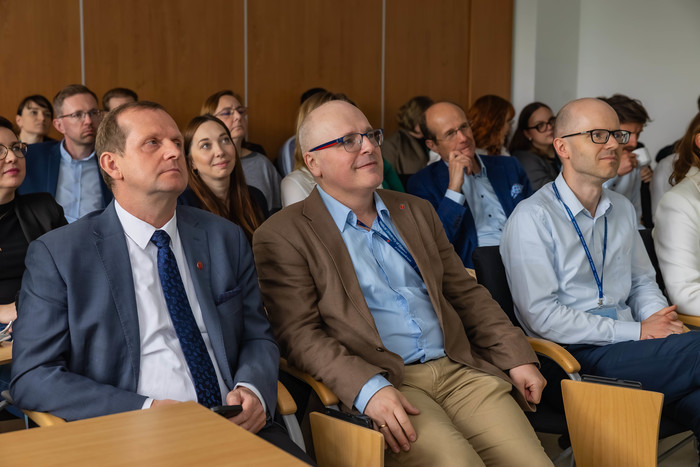
The seminar provided an opportunity for the exchange of experience among researchers representing various disciplines within medical and biological sciences, as well as for the presentation of the latest achievements of early-career scientists developing research on vascular endothelium and microcirculation. The organisers emphasised that the event is intended to become a recurring platform for integrating the community engaged in cardiovascular medicine and experimental cardiology.
Photo Paweł Sudara/MUG