Experts on Optimising Chest CT Screening and Artificial Intelligence in Healthcare – AGILE Conference
24.03.2026
International Expert Committee for Optimising Chest CT Screening and Integrating Artificial Intelligence in Healthcare – AGILE Conference at the Medical University of Gdańsk
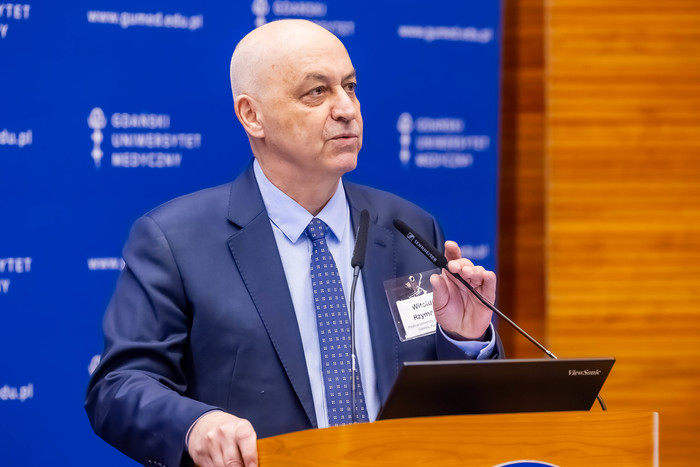
Prof. Witold Rzyman
From 19 to 21 March 2026, the Medical University of Gdańsk hosted the international scientific conference 3rd Annual AGILE Meeting Conference. The programme featured plenary lectures, thematic sessions, panel discussions, and clinical case reviews delivered by leading experts from Europe, the United States, and Asia. The event, organised by Prof. Witold Rzyman, Head of the Department and Clinic of Thoracic Surgery at the Medical University of Gdańsk and National Consultant in Thoracic Surgery, was opened each day by representatives of the University authorities: Rector, Prof. Michał Markuszewski, Vice-Rector for Clinical Affairs Prof. Michał Hoffmann, and Director of the University Clinical Centre in Gdańsk, Jakub Kraszewski, Ph.D.. Participants were also greeted remotely by the Minister of Health, Ms Jolanta Sobierajska-Grenda.
In light of the growing importance of early detection of tobacco-related diseases, the international expert committee set itself the goal of developing modern and effective diagnostic solutions. The primary aim of the team’s work is to create optimised protocols for assessing the most significant conditions – thoracic and upper abdominal malignancies, cardiovascular diseases, and chronic obstructive pulmonary disease – which collectively form the so-called Big Three (BIG3), responsible for a substantial proportion of premature deaths worldwide.
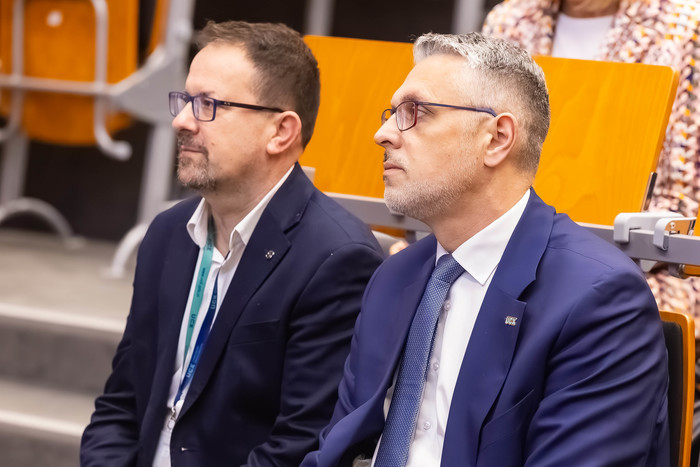
Prof. Michał Hoffmann, Jakub Kraszewski, Ph.D.
The committee responsible for organising the conference focuses not only on clinical aspects but also on identifying challenges associated with implementing chest CT screening programmes. Particular emphasis is placed on developing practical and scalable solutions that can be applied in economically constrained countries. In this context, ensuring equitable access to advanced diagnostics and enhancing the efficiency of healthcare systems is of paramount importance.
A key strategy adopted by the committee is the extensive deployment of artificial intelligence across all stages of medical care. This encompasses risk assessment, early detection of pathological changes, support for therapeutic decision-making, and treatment management. The integration of AI-based tools holds the potential to significantly improve diagnostic efficacy while simultaneously reducing costs and alleviating the burden on healthcare personnel.
The committee comprises renowned experts from leading global academic and clinical centres: Claudia Henschke (Icahn School of Medicine at Mount Sinai), Matthijs Oudkerk (University of Groningen), David Yankelevitz (Icahn School of Medicine at Mount Sinai), James Mulshine (Rush University), John Field (University of Liverpool), Mario Silva (University of Parma), and representatives from the MUG: Prof. Witold Rzyman and Prof. Edyta Szurowska.


Photo: Paweł Sudara/MUG